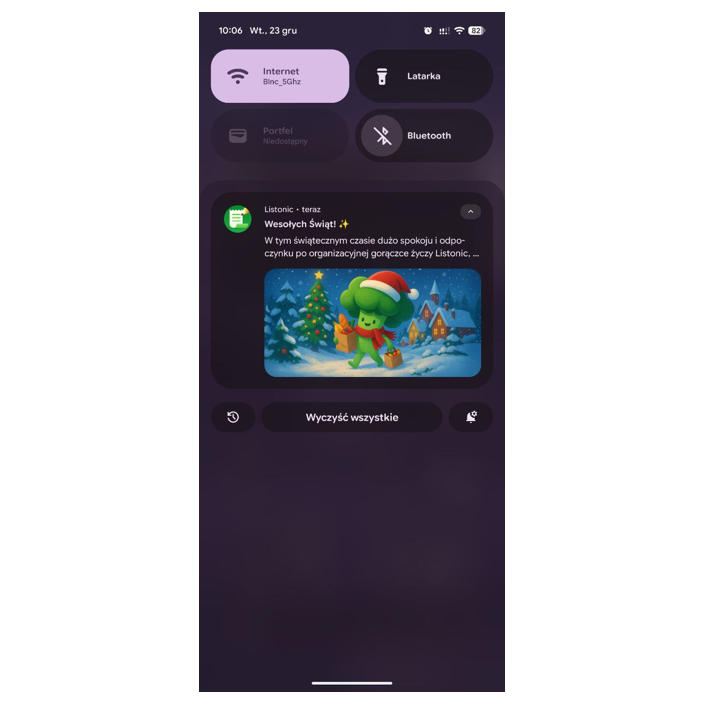
The Challenge
Our sales team needed a new ad product: high-impact, rich-media push notifications with targeted landing pages. At the same time, the marketing team was struggling with a fragmented and slow setup that took days to process global campaigns. We needed a professional, internal tool that could handle complex targeting (categories, languages, behavior) and rapid delivery.
My Strategy & Actions: Bridging the Gap
- Stakeholder Alignment: I conducted deep-dive interviews with Sales, AdOps, and Marketing to consolidate conflicting requirements into one unified PRD.
- Product Definition: I designed the logic for “In-App Landings” – a seamless transition from a push notification to a branded, interactive page where users can add items directly to their lists.
- Technical Orchestration: I led the technical kickoff and managed a cross-functional team (Web, Backend, Mobile, QA) to build a custom system that bypasses the limitations of the standard Firebase console.
- Targeting Logic: We implemented a system that triggers notifications based on user behavior, such as specific product categories added to lists, ensuring high contextual relevance.
The Results & Business Value
- Technical Breakthrough: We optimized the delivery pipeline, reducing the send-out window from several days to under 60 minutes for our entire user base.
- Monetization: Launched a new “Push Ad” product in our portfolio, which now serves as a key high-margin upsell for standard display campaigns.
- Operational Excellence: The AdOps and Marketing teams now have a single, intuitive source of truth, drastically reducing the time spent on campaign setup and minimizing human error.
Summary
Building the Push Engine was a masterclass in Internal Tools Product Management. It proved that by investing in custom infrastructure, a company can solve internal friction while simultaneously creating new ways to generate revenue. This project solidified our ability to deliver high-context, high-performance advertising at scale.